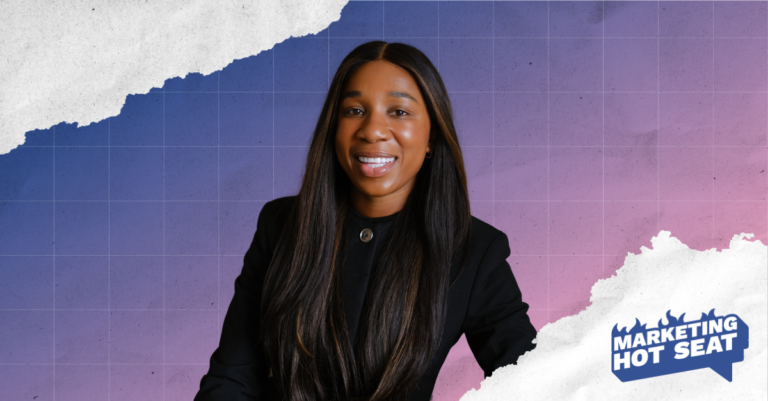
This year marks seven years since I joined AAR as CEO.
It’s prompted a lot of reflection. Not because I think we’ve finished transforming the business – far from it – but because we’re far enough into the journey to see what change really looks like in practice.
When I joined in 2019, I knew AAR needed to evolve. What I didn’t fully appreciate was how much the experience would change me too.
Over the past seven years we’ve broadened what we do, evolved our culture, built new capabilities and transformed the role we play for clients. Some things have gone exactly as planned. Many haven’t.
That’s the reality of transformation. It’s rarely neat, rarely linear and almost never happens as quickly as you’d like.
So rather than looking back at what we’ve achieved, I wanted to share some of the lessons I’ve learned while leading change – both in AAR and in myself.
1. Transformation starts when you’re willing to challenge success
One of the things that attracted me to AAR was its willingness to evolve. The business already had so much going for it: integrity, neutrality, deep expertise and trusted client relationships. But what stood out even more was a culture that was prepared to ask difficult questions about the future, even when the present was working well.
That instinct has always been part of AAR’s DNA.
Lyndy Payne founded AAR in 1975 and created something entirely new. In 1996, she handed leadership to Martin Jones, Kerry Glazer and Paul Phillips to take the business forward. In 2019, Kerry showed that same foresight in recognising that AAR needed a new chapter and trusting me to lead it.
Looking back, that’s probably the first lesson.
The hardest transformations don’t usually start when a business is struggling. They start when people have the courage to recognise that what got you here may not get you where you need to go next.
2. Keep the strategy simple, even when the world isn’t
Before joining AAR, I was CEO of a global data and digital agency. From that vantage point, I could see the industry changing rapidly. Technology and data were reshaping marketing. Client challenges were becoming more complex. New capabilities were emerging all the time.
I felt strongly that AAR had an opportunity to evolve alongside those changes.
The strategy itself was actually quite simple: move from being known primarily as a pitch consultancy to becoming a broader consultancy serving the marketing industry. Seven years later, that direction hasn’t really changed. What has changed is our confidence in it.
One thing I’ve learned is that people often mistake complexity for sophistication. They aren’t the same thing. The best strategies I’ve seen are usually the simplest. The challenge isn’t creating them. It’s having the patience and discipline to stick with them.
3. Transformation has to start with you
One of my biggest priorities was making sure we transformed ourselves before advising clients to do the same. It’s easy to talk about change. Living through it is something else entirely.
We’ve had to rethink our own operating model, our proposition, the talent we need and how we work together. At times that’s been uncomfortable. At times it’s been messy. But it’s also made us better advisers.
When clients talk to us about transformation today, we’re not speaking from theory. We’ve wrestled with many of the same questions ourselves.
I’ve come to believe that strategy only creates value when people can actually execute it. That’s where operating models matter. It’s the practical bridge between ambition and delivery.
4. Transformation isn’t complicated. It’s hard
This may be the biggest lesson of all.
When I joined AAR, I thought defining the strategy would be the difficult part. In reality, that was probably the easiest part. The hard bit is leading change day after day.
Making decisions without complete information. Holding your nerve when progress feels slower than you’d hoped. Continuing to communicate the direction when you’re tired of hearing yourself say the same thing.
Transformation is often presented as a big moment. In reality, it’s thousands of small decisions made consistently over time.
Most of the challenges aren’t intellectual. They’re human. And that’s what makes them difficult.
5. Culture changes more slowly than strategy
If there’s one thing I’ve underestimated over the years, it’s the power of culture.
Looking back, AAR today is a very different business from the one I joined. We’ve evolved our proposition, diversified our revenue streams and built new capabilities.
But changing culture has been both the most important and the hardest part of that journey.
I’ve learned that values and culture aren’t the same thing. Values should endure. They’re your anchor. Culture, on the other hand, needs to evolve to support where you’re trying to go.
When strategy and culture align, progress accelerates. When they don’t, even talented and well-intentioned people can find themselves pulling in different directions. That’s been one of the tougher lessons of leadership.
6. Momentum creates belief
I’ve become a huge believer in momentum. Not because every decision is right. It won’t be. But because transformation rarely comes from waiting for certainty.
Earlier in my career, I probably spent more time looking for the perfect answer. Experience has taught me that progress matters more. I’d rather make a good decision, learn from it and keep moving than spend months searching for a perfect one.
I’ve also learned not to underestimate the power of small wins. When you’re asking people to embrace change, belief matters. Sometimes a small piece of visible progress can do more to build confidence than months of planning.
There is a balance, though. You need to be impatient about progress and patient with people. You need to push forward and bring others with you. Sometimes the fastest way forward is to slow down long enough for everyone else to catch up.
7. You can’t do it alone
For all the focus that gets placed on leaders, I’ve never believed transformation is driven by one person. Every meaningful change I’ve been part of has been a team effort.
Our clients have played a huge role in our journey. The ones who trusted us, challenged us and encouraged us to stretch beyond our comfort zone have helped shape the business we’ve become.
I’ve also learned the value of what I call critical friends. The people who challenge your thinking, tell you things you may not want to hear, cheerlead when your confidence wobbles and provide perspective when you’re too close to the problem.
Every leader needs those people. I certainly have.
8. Stay curious
Personally, this experience has changed me. I’m naturally a people pleaser. Leading transformation requires something different. It requires clarity, conviction and a willingness to make decisions that won’t always make everyone happy.
That’s been a learning curve.
I also remember thinking that moving to a smaller business might create more balance in my life. The reality was quite the opposite. When you care deeply about what you’re building, and about the people you’re building it with, the work becomes incredibly personal.
Seven years on, we’re still in the middle of the journey. But we’re a very different business from the one I joined. We’re growing, we’re diversifying and we’re continuing to evolve.
Most importantly, we’re still curious enough to challenge ourselves and ambitious enough to keep changing. And I think that’s the real lesson. Transformation isn’t an event. It isn’t a programme. And it certainly isn’t a destination. It’s an ongoing process of learning, adapting and moving forward. We’re still doing exactly that.
If you’re navigating a similar journey, I’d be delighted to be a critical friend in your corner. It’s one of the greatest gifts I’ve been given over the past seven years, and one I’d be very happy to pay forward.