Welcome to Marketing Hot Seat – a fortnightly series of honest conversations with senior marketers about what’s really shaping marketing today.
It’s a space for clear thinking, real experience, and the trade-offs behind modern marketing decisions, and we’re delighted to share them with you.
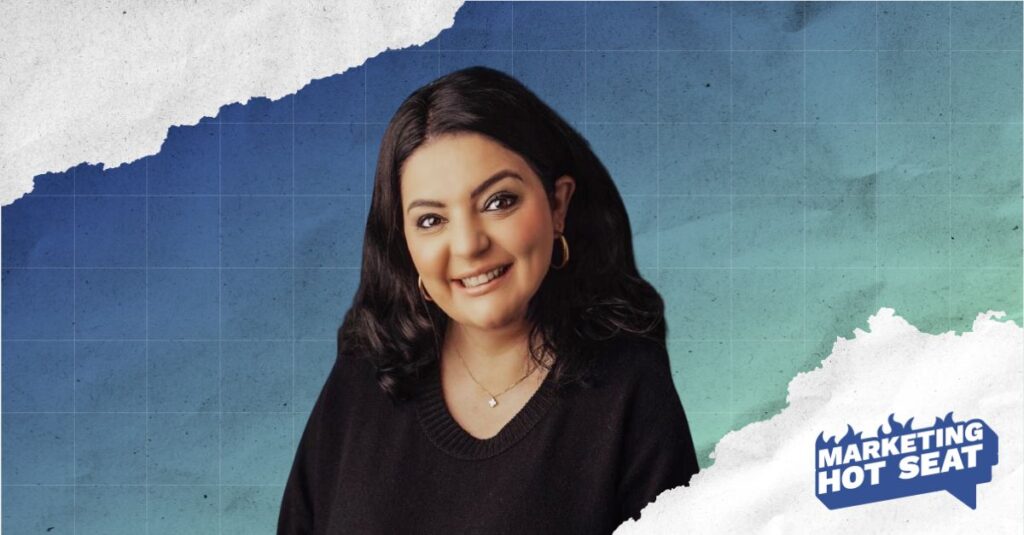
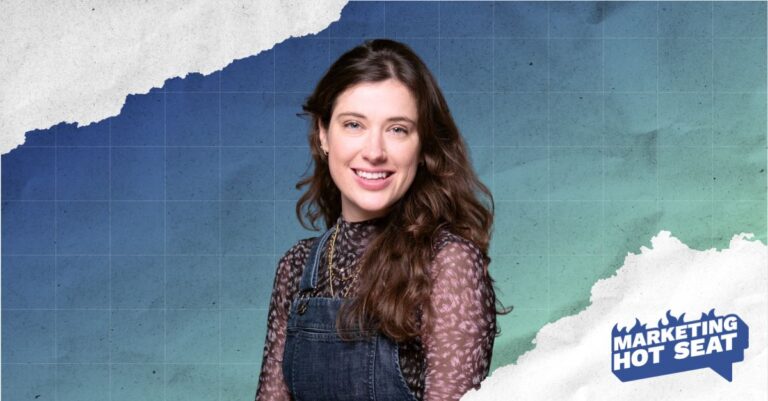
In this edition we speak to Emma Walker, Chief Marketing Officer at Just Group. Emma is an experienced marketing and customer leader, with a career spanning financial services, brand, customer strategy, propositions and growth, including senior roles at LifeSearch, AXA, SunLife and MoneySuperMarket.
With a background that combines marketing, brand commercial growth and customer experience, Emma brings a pragmatic perspective on what makes marketing effective. In our conversation, she shares her views on customer understanding, the changing role of judgement, what makes a great marketing partner and the decisions that can genuinely change a business.
What is the one thing in marketing right now that isn’t getting the attention it deserves?
I’d say deep customer understanding and human judgement.
We’ve got far more data, technology and machine intelligence than we’ve ever had before. But I have this underlying fear that there’s a danger we’ll know more and more about customers, while understanding less and less about them.
We know where they click, what they buy, what they watch. But are we applying the same level of understanding to why they behave as they do? What’s happening in their lives? What are they worried about? What do they value? That requires curiosity and empathy.
And within that, I think we’re starting to undervalue judgement. All that information doesn’t automatically lead to better decisions. Some of the best marketing decisions can’t be proven in advance. They require customer understanding, commercial judgement, creativity and sometimes courage.
Technology is becoming more powerful, so the human capabilities should become more valuable, not less. We need to make sure we don’t lose our instincts.
What separates a good marketing partner from a great one?
The first thing is the quality of decision-making the organisation can make once that agency isn’t there. I think that’s profoundly different.
I always want a partner to be constructively disloyal to the brief. Sometimes the greatest value you can bring is saying, ‘Hang on a minute. We’re here to help you solve the problem. The question you’ve asked maybe isn’t the right question.’
That comes down to trust. Don’t just answer the question, because if we knew the answer, we’d do it ourselves. I called it constructively disloyal on purpose.
The other thing is bringing something you just cannot replicate internally – perspective. You see different businesses, different structures, different solutions. So it’s about bringing that outside perspective and being a critical friend, while also being immersed in the reality of the organisation.
The worst thing is when provocative ideas come in without an understanding of the actual organisation. You end up with a beautiful PowerPoint deck that everyone feels great about, and then you go back to your real world.
The measure is that you can say, ‘If that partner hadn’t been in this business, we wouldn’t be as good as we are today.’ It’s about helping us make better decisions, understanding the organisation, but not just following a brief. And that takes trust – being able to say, ‘Can I challenge your thinking? Can I be provocative?’”
What is holding marketing back from delivering on its ambitions right now?
It’s almost like we’re spoiled for choice. We’ve gone from scarcity to a world of abundance. Through AI, almost anybody can create enormous amounts of competent content, creative, analysis and communications really quickly, at very low marginal cost. You kind of go, ‘That’s a dream come true.’
But ‘more’ stops being a competitive advantage. It’s less about how do I produce more and how do I get cheaper, and more about judgement, taste, originality, prioritisation and distinctiveness.
I do worry that if you don’t have big, bold, brave, strategic marketers, we can end up with everything looking the same and feeling the same.
For a CMO, it’s less about orchestrating the production of marketing and more about making choices that are going to have real differentiation.
What decision are you most proud of because it changed the direction of a business?
I’m going to give you two. The first one, and kudos to AAR for their counsel, was reviewing all four Ps of our marketing operating model together at Just Group: People, Partners, Process and Platforms.
The bravest decision, and the right decision, was understanding that those things are an ecosystem. You can’t look at them in isolation. Doing them together changed the direction of the business.
We built a marketing machine and a commercial growth engine because of the work we did with AAR. It wasn’t just a little bit different; it was profoundly different. That was hard, and I think that decision was the right one. I would absolutely do it again.
What I’m proud of is that the formula works. It takes some guts, but it does work. It’s exciting for everybody involved, and it did game-change the business.
You’re suddenly going into a space that’s both intangible and tangible. You’re saying, ‘I want to change my human capability, my partnership model, my processes, my technology.’ You’re effectively saying every little bit is going to have to change. And that’s quite frightening, because you’re thinking, ‘Is that going to cost us money?’
But you’re also inviting the rest of the organisation in. Sometimes we just want to influence a bit without having to ask permission or take the technology team on the journey with us. This was different. We were saying, ‘I’m prepared to have the organisation scrutinise this, but I also need to implement it.’ And that’s why I’m proud of it.
The other thing I’m consistently proud of is backing people who don’t necessarily have conventional marketing backgrounds, but have talent, attitude or enthusiasm. Curating teams that, on paper, might not look right, but somehow work – that will always be one of the things I’m proudest of.
Who has taught you the most about marketing?
My biggest inspiration, and the person who taught me the most, is Gareth Helm, who was Chief Marketing Officer at MoneySuperMarket when I was there. I was young and working in commercial and propositions – nothing to do with marketing.
Then Gareth came along and essentially said: “You know what? Financial services makes a difference to society, and actually, we can make it fun and cool.” The maverick decisions he made at the time created a lifelong enthusiasm in me. I remember thinking, “I just need to be on that side of the road.”
He took on the establishment of financial services at the time and said, “I’m going to put a man on TV wearing hot pants.” It sounds almost normal now, because we see that kind of thing all the time, but at the time it was incredibly bold. He created a generation of aspiring marketers who didn’t necessarily come from traditional marketing backgrounds.
Years later, I got back in touch and asked him to be my mentor. He’s actually working with me now as a career coach, and we’re very close. So, to me, he’s a hero and I owe him an awful lot. I think that’s what I respect most about the marketers who inspire me: intellect, guts and a willingness to make big, bold decisions without relying entirely on the data.