Welcome to the Marketing Hot Seat – a fortnightly series of honest conversations with senior marketers about what’s really shaping marketing today.
It’s a space for clear thinking, real experience, and the trade-offs behind modern marketing decisions, and we’re delighted to share them with you.
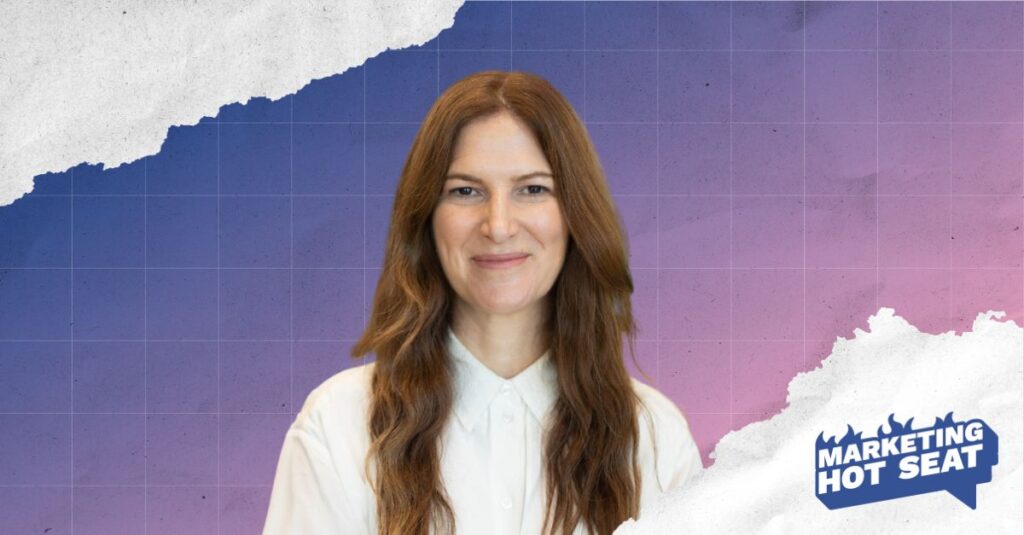
In this edition we speak to Michelle Marks, Chief Marketing Officer at Trinny London. Michelle is a senior marketing and creative leader with experience spanning beauty, technology, media and entertainment, having previously held leadership roles at Charlotte Tilbury and Meta, as well as working with brands including Sony Music and BBC.
At Trinny London, Michelle brings together her experience across brand, creativity, digital and technology to drive the marketing agenda for one of the beauty industry’s most distinctive brands. Her career has focused on building engaging brands and finding new ways to connect businesses with their audiences.
What is the one thing in marketing right now that isn’t getting the attention it deserves?
Top of mind for me is the cultural landscape for women over 45. Everyone talks about cultural relevance and operating at the speed of culture, but the conversation is almost entirely centred around Gen Z/young millennials.
But is that really what cultural relevance looks like for a woman in her late forties or fifties?
Beauty brands are waking up to the spending power of women over 45, but few are exploring what it means to shape culture for Gen X. It’s something I’m thinking about a lot in relation to Trinny London, but I don’t see many others talking about it.
What separates a good marketing partner from a great one?
This probably sounds obvious, but it’s being a genuine extension of the team. That’s actually quite hard to find, and it’s probably one of the reasons we do so much in-house.
The best partners make us feel less alone in the problem. They really understand the business, work at our pace and bring a point of view. We don’t need people to simply agree with us. We need people who challenge us and bring something we couldn’t do ourselves.
Michelle Marks, CMO at Trinny London
What is holding marketing back from delivering on its ambitions right now?
We’ve never had more data or dashboards, but I wonder if they’re taking us further away from real proximity to customers. Insights alone aren’t enough. It’s about knowing the consumer intimately, whether through research or spending time with them. I wonder if we’re doing less of that because we have so many dashboards.
We’re also producing more content than ever, but I’m not convinced we’re becoming more memorable. There’s pressure to be always-on, which can keep you top of mind, but it can also create an amorphous mass of content without much distinctiveness.
The brands doing marketing well are ruthlessly focused: fewer, bigger, better ideas, grounded in what they stand for and who they’re serving. For us, that’s about understanding how customers feel, what they’re navigating and what they genuinely need. We hope to make our woman feel seen.
What decision are you most proud of because it changed the direction of a business?
I’ve been at Trinny London for just over a year and have directed the business to investing more in long term growth via brand building.
For a primarily DTC business that’s spent years optimising around performance, making a significant investment in brand can be uncomfortable, particularly when you can’t point to an immediate return the next morning.
We approached it through a structured pilot, running a brand campaign in one region with a holdout, which allowed us to measure the impact properly. It worked really well and gave us a huge amount of learning. More importantly, it gave us a test case we could use to build confidence in greater brand investment going forward. The pilot has helped change the internal conversation around marketing investment. We now genuinely talk about brand as a commercial growth lever rather than a cost centre.
That said, the challenge hasn’t gone away. We still have daily targets to hit and commercial pressures to manage. That’s why I think the brand versus performance debate is so interesting. The theory is easy to buy into. The challenge will always be making it work in practice.
Who has taught you the most about marketing?
I seem to gravitate towards working with founders (mainly celebrity ones!) and I’ve learnt from all of them.
Simon Cowell taught me that marketing isn’t about you. He was forensic about understanding what the everyman wanted, actively seeking different perspectives rather than relying on his own taste.
Charlotte Tilbury is a masterclass in world-class brand building. Her world is so coherent and distinctive that you could remove the logo and still know it was Charlotte Tilbury.
Trinny has taught me about vision and ambition. She believes you can create something that doesn’t exist yet and has the tenacity to keep going until it does.