Welcome to the Marketing Hot Seat – a fortnightly series of honest conversations with senior marketers about what’s really shaping marketing today.
It’s a space for clear thinking, real experience, and the trade-offs behind modern marketing decisions, and we’re delighted to share them with you.
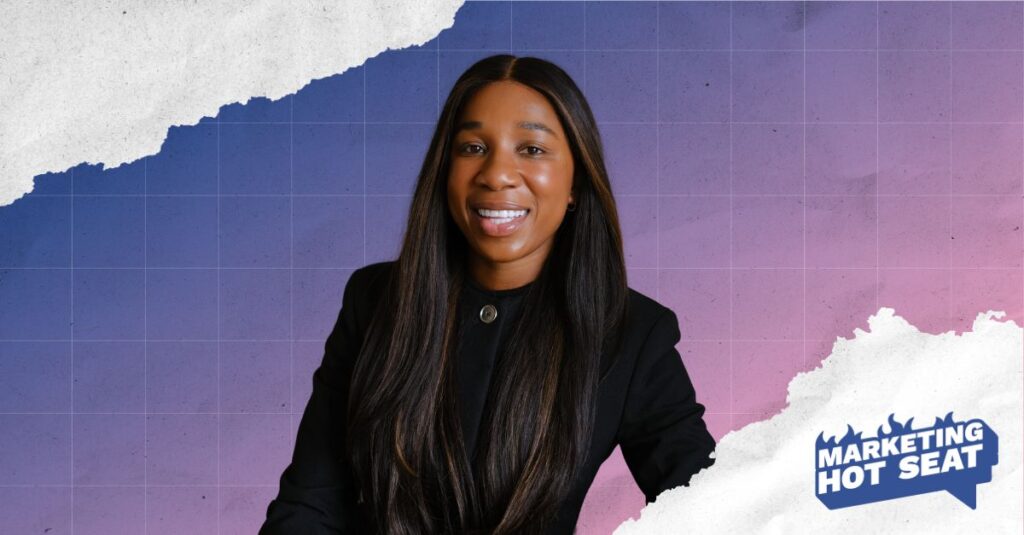
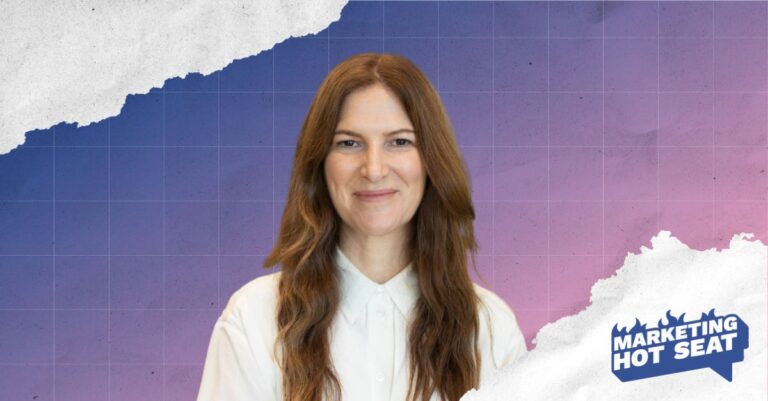
In this edition, we speak with Naomi Walkland, Chief Marketing Officer at Motorway, where she leads brand, growth, product marketing, communications and business marketing. Previously, she was Vice President of Marketing at Bumble, overseeing international marketing across EMEA and APAC and playing a key role in the company’s growth and IPO journey. Naomi has built and scaled brands across technology, marketplaces and consumer businesses, with a particular focus on growth, customer insight and brand transformation. She also serves on the Global Board of The Marketing Society and is widely recognised as one of the UK’s leading marketing leaders.
What’s the one thing in marketing right now that isn’t getting the attention it deserves?
I think we’re not talking enough about the future of marketing organisations and roles.
A lot of that conversation is happening in product and engineering, particularly in tech companies. You’re seeing roles evolve into these more fluid, ‘builder’ models that combine product, design and analytics, often enabled by AI.
In marketing, the focus has been much more on efficiency, automation and producing content faster. But I think the bigger shift is around people and teams.
AI gives us the opportunity to rethink roles and broaden our impact. Yes, some things will be automated, but it should also free us up to spend more time on customers, strategy and solving better problems.
The shape of marketing teams, and the skills within them, are going to change significantly. We’re just not talking about that enough yet.
What separates a good marketing partner from a great one?
A good partner delivers against the brief. A great one improves it.
The best partners care deeply about the outcome, not just the output. They are invested in the business, the customer and the commercial impact, not just the deliverable.
They challenge you, bring new perspectives and sometimes make you uncomfortable in a way that pushes the work forward.
For me, the strongest partnerships feel like an extension of the team. There’s real depth of understanding, not just of marketing, but of the wider business.
I’ve worked with agencies like 21st Century Brand that really exemplify this. They take the time to understand the full organisation, bring external perspective from other high-growth brands, and stay close to the work even after it’s delivered.
That level of proactivity and care is underrated. It’s not just about producing the work, it’s about asking if it’s landed, both with customers and internally. That’s what makes the relationship more impactful over time.
What do you think is holding marketing back from delivering on its ambitions right now?
I think, at times, we still undersell ourselves.
Marketing sits at the intersection of brand, product, customer experience and performance, but we don’t always articulate our impact in those terms. There’s more we can do to clearly tie our work back to growth, profitability and customer behaviour.
The most effective marketing leaders think like general managers. This was one of the best pieces of feedback I received in my career. They take ownership of the outcomes, not just the activity, and have a clear link to how marketing drives those commercial outcomes.
Sometimes we underestimate ourselves in terms of what we can do and the influence we can have within teams. There’s still a bit of a confidence gap. And in a tough environment, where customer, brand, product and growth all matter, the question is how we make better use of the fact that we sit at the intersection of all of them.
What action or decision are you most proud of because it had a strong impact on the business?
One of the biggest decisions I made when I joined Motorway was to slow down and observe.
It’s easy as a marketing leader to come in and change everything, but I focused first on understanding the foundations and clarifying the role of marketing. I explored questions like: what role does marketing play in the business now? What role can it play? Are we all aligned on that? I also focused on aligning the team around shared goals and creating stronger links between brand and growth, and what that meant in practice.
It sounds simple, but taking the time to do that alignment was really what changed the trajectory of our marketing efforts. We saw stronger performance, better focus, and a clearer understanding of where marketing was creating value.
When we came to our brand relaunch, that groundwork really paid off. We saw clear improvements across brand awareness and commercial performance, but it was only possible because the foundations were strong.
Who has taught you the most about marketing?
I’ve had a lot of people who have influenced me when it comes to marketing. Personally, I’ve spent a lot of my career working for founder-led companies and organisations, and I’ve loved working with founders because they bring a real clarity of thinking. They cut through complexity and ask simple but important questions. Does this matter for the business? Does it matter for the customer?
That focus on simplicity is something I’ve taken with me.
My former boss Aaron Cole also had a big influence. He really helped me understand the importance of connecting culture, customer and commercial outcomes. That foundation has shaped how I think about marketing ever since.
And Leila Fataar has been another. Her work on cultural relevance and its role in driving growth was ahead of its time, and it really shaped how I think about brand in a broader context.
More generally, I try to stay curious. I learn from peers, from other CMOs, from competitors and from brands around the world. That constant curiosity is probably the biggest driver of how I’ve developed.
_______
This interview is part of the Marketing Hot Seat, a fortnightly series from AAR.
AAR helps marketing leaders design future-fit operating models that unlock greater commercial impact.
We work alongside marketing teams to align structure, capability, technology and agency partners, so the way marketing is set up enables better strategy, stronger creativity, and more effective execution.
When the operating model is working, marketing performs better in practice, not just in principle.