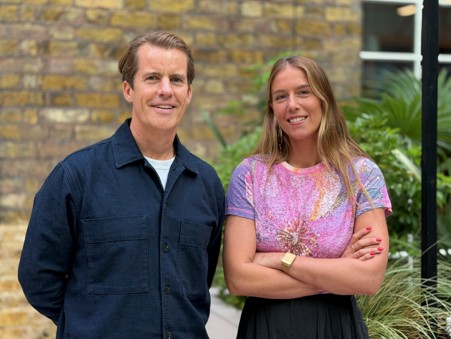
Every year, courtesy of the AdForum Global Summit I, and other consultants from around the world, spend a week in North America meeting with agency and HoldCo leaders in a rare opportunity to lift our heads from the day-to-day to hear their current thinking, see the latest work and take a temperature check on the agency landscape.
Over five days, we met with 12 agencies in Toronto and 10 in New York, all of which provided a good cross section across global, domestic, network, and owner-managed agencies and HoldCo’s.
Here’s my take on the week, summarised in a list of eight observations (who doesn’t like a list?).
- Agencies that have a longstanding proposition and POV are better equipped to deliver a more persuasive sense of what they stand for and believe in. The impact of which is that they are able to tell their story with more authenticity, clarity, and conviction. Iris (Participation) and Zulu Alpha Kilo (We Fight Sameness) were two such excellent examples.*
- Persuasive storytelling has always been a winning approach be it in new business pitches or selling ideas and work to existing clients. But something has changed. Whereas yesterday’s stories focused exclusively on the why and the what, or to put it more eloquently the strategy and the work, today’s stories require the how, the operating system to be more persuasive. How the agency is going to execute its ideas has become as important as the ideas themselves. This is the opportunity for agencies to differentiate more clearly from their competitors and is of particular relevance when considering integrated requirements across multiple aspects of the customer journey (brand, the messy middle, conversion) and multiple agency specialties (creative, media, UX and CX).
- Consumers and clients are de-sectoring brands in their evaluation and judgement. So, the reference point for the user experience of a digital banking service is no longer just other digital banking services. It’s the brands that deliver the best online experience for users across all their digital engagement. The bar is set by Netflix or Apple or Spotify or Strava.
- Artificial Intelligence – build, buy, or rent? There’s more than enough energy being invested in what AI can achieve, generally along the lines of the alchemy that promises it all cheaper, faster, and better than before. What enjoys less airtime, but I would suggest is no less important, is consideration of the benefits or otherwise in whether to build AI within the organisation (client or agency), buy AI or rent it from a third party. Agencies would do well to sell the client benefits of the agency’s approach to AI, be it building, buying, or renting. As with so many decisions, there’s no clear right or wrong, and brand owners will consider an agency’s approach in terms of what’s right for their requirements and circumstances.
- Scott Knox President & CEO of The Institute of Canadian Agencies is on a mission. Under the banner of Brands Need More Canada the ambition is to have agency pitch consultants and the international CMO community consider Canadian agencies for their global agency needs and not defer to New York, Chicago, or LA as the default North American options. While Canada is not as mature or as sophisticated an agency marketplace as New York (not a criticism), there are some real agency gems.Three that stood out for me are Broken Heart Love Affair who’s people and attitude are reminiscent of a mash-up of Mother, Lucky Generals and Uncommon Creative Studios; Sid Lee who showed us a breadth of craft, innovation and cultural understanding across the widest portfolio of their clients FILA, EA Games and Rona (a home improvement and construction retailer), and Response Innovations, a customer marketing agency for their focus and clarity; they know their superpowers, the marketing challenges for which they are right, and those that other agencies are better placed to service.
- AI (again). Agencies need to get better at presenting how their AI and other technology works. Much better! Showing a pre-recorded screen shot of the prompts and commands being applied just doesn’t cut it. I sat through too many presentations looking at a cursor moving around a screen that was too busy, too small, and too far away! There’s too much focus on features and not enough on benefits and, as Martin Jones was always fond of saying, ‘I don’t care how the radiator works, just that it’s hot when I touch it.’ The industry is full of smart people, so I’m sure we’ll figure it out.
- Not everyone needs or wants a Ferrari. The adoption and integration of an agency’s technology solution into a client’s existing tech stack and ways of working is a delicate undertaking if it’s going to work successfully. The challenges are numerous – technological, operational, compliance requirements, data protocols, training, and behaviour change are all potential obstacles.At their shiny new NYC offices MSQ shared MSQ Assist, their agentic workflow and integrated delivery system, and MSQ Growth Engine, their integrated Creative and Media proposition. Both were clearly articulated, easily understood and had a plug and play appeal that, if I were a CMO, I’d be wanting to have a test drive rather than being worried about crashing as I drove out of the showroom. MSQ are not alone in making what they have to sell more buyable, but they were a fine example from all our agency meetings.
- The enemy is not Networks or Holding Companies or Independents! It’s lazy thinking and execution, the acceptance of mediocrity, an absence of argument, and a lack of collective marketer and agency courage.
What we do is not rocket science, but I’ll reference a JFK quote about rocket science that I think is appropriate.
At a speech given in 1962 when committing the United States to landing a man on the moon, he said ‘We choose to go to the Moon in this decade and do the other things, not because they are easy, but because they are hard.’
If we are to continue to prove the value of marketing to business success and the role agencies contribute, whatever their ownership or heritage, we need to strive to master what is hard, what is more difficult to achieve and not settle for anything less. And in doing so, collectively we will achieve greater success.
* Note that all reference are not exclusive examples, they just happen to be agencies with which we met on this year’s summit.